
Central AC Repair in Southern Indiana
When the air conditioner quits in a Southern Indiana July, you need a diagnosis, not a sales pitch. We repair central AC and ducted heat pump systems across Clark and Floyd County, and you see the written price before any work starts.
Henry Brothers repairs central air conditioners and ducted heat pumps for homeowners across Clark and Floyd County, Indiana. Diagnosis first, then a written quote. The price we quote is the price you pay. No trip charge in our service area. Call (812) 994-1008.
One company, two kinds of cooling, so let's get you to the right page. If your home has central air conditioning or a ducted heat pump (ductwork, a vent in every room, one big outdoor unit), you are in the right place. If the system that quit is a ductless wall-mounted unit, our ductless mini split repair page covers that equipment instead. The two families fail in different ways, and we diagnose them differently.
Why Is My AC Blowing Warm Air?
Check the thermostat first: set to COOL, fan set to AUTO. If that is right, the usual causes are a clogged filter choking airflow, an outdoor unit that has lost power, or low refrigerant escaping through a leak. Warm air with strong airflow points outside to the condenser; weak airflow points to the filter or the blower.
Our AC not cooling guide walks through the five-minute checks any homeowner can do safely before calling anyone. If those come up clean, the next step is a gauge reading and an electrical test at the condenser. That is where we come in.
Why Is There Ice on My AC Lines or Coil?
Ice means the evaporator coil is running colder than it should, and that traces back to one of two things: starved airflow (a dirty filter, a matted coil, blocked return vents) or low refrigerant. The coil freezes, airflow drops further, and the ice creeps down the refrigerant lines toward the outdoor unit.
Shut the system off and let it thaw. Running it frozen can slug the compressor with liquid refrigerant, and the compressor is the most expensive part in the machine. Once it thaws, we find out which of the two causes you have. Guessing wrong just refreezes the coil next week.
Why Won't My AC Turn On at All?
A central AC that will not start usually has a fault in the start circuit: a tripped breaker, a failed capacitor, or a burned contactor. The capacitor gives the compressor its starting jolt; the contactor is the switch that sends it power. Both fail routinely in Ohio Valley summers, and both are quick tests with a meter.
Reset a tripped breaker once. If it trips again, stop. A breaker that keeps tripping is protecting you from something, usually a shorted motor or wiring, and forcing it invites a bigger repair. A full drain pan can also shut the whole system down through the float switch, which turns out to be the cheapest fix on this entire page.
Why Is My AC Loud, Buzzing, or Clicking?
A hard electrical buzz from the outdoor unit is often the compressor straining to start against a dead capacitor. Rapid clicking at the unit points to a chattering contactor or a control relay. A screech is usually a motor bearing on its way out. A metal-on-metal grind means shut it down now and leave it off until someone looks at it.
Noises are symptoms, not diagnoses. We put a meter on the components and find the part that is actually failing rather than replacing pieces until the sound stops.
Why Is My AC Leaking Water?
Water around the indoor unit is nearly always a clogged condensate drain line or a rusted-through drain pan, and sometimes the puddle is a frozen coil melting after the system shut itself down. On a humid Southern Indiana day your AC pulls gallons of water out of the air, and all of it has to leave through one small drain.
We clear the line, treat it against the algae that clogged it, check the pan and the float switch, and make sure the water on the floor is not a symptom of the freezing problem above.
Why Won't We Just Top Off Your Refrigerant?
Refrigerant is not fuel. A central AC never uses it up. A system that is low has a leak, and a leak that gets topped off in June is the same repair bill again next June, with a strained compressor running undercharged in between. Our rule on refrigerant is simple: found and fixed, never topped off every season.
Federal law backs that discipline. The EPA's Section 608 rules require certification to handle refrigerant and restrict venting it, and for good reason. The older blends are on the way out under EPA's Technology Transitions program, which sets HFC limits sector by sector, air conditioning and heat pumps included, and the newer blends cost more. We leak-search with electronic detection and pressure testing, repair the leak, then weigh the charge back in to the manufacturer's spec instead of guessing at the gauges.
What Happens When You Call
Four steps, every call, every town. AC repair in Charlestown runs from our home base, and the visit looks the same everywhere else in Clark and Floyd County.
Tell Us the Symptom
Warm air, ice, a buzz, a puddle. What you noticed and when it started narrows the diagnosis before we ever open a panel.
We Diagnose
Meter on the electricals, gauges on the refrigerant circuit, eyes on the coil and the drain. We find the failed part, not the first plausible one.
Written Quote
You get the repair in writing before we touch anything. The price we quote is the price you pay.
Fix and Verify
We make the repair, then run the system and measure the temperature drop across the coil to prove it is cooling the way it should.
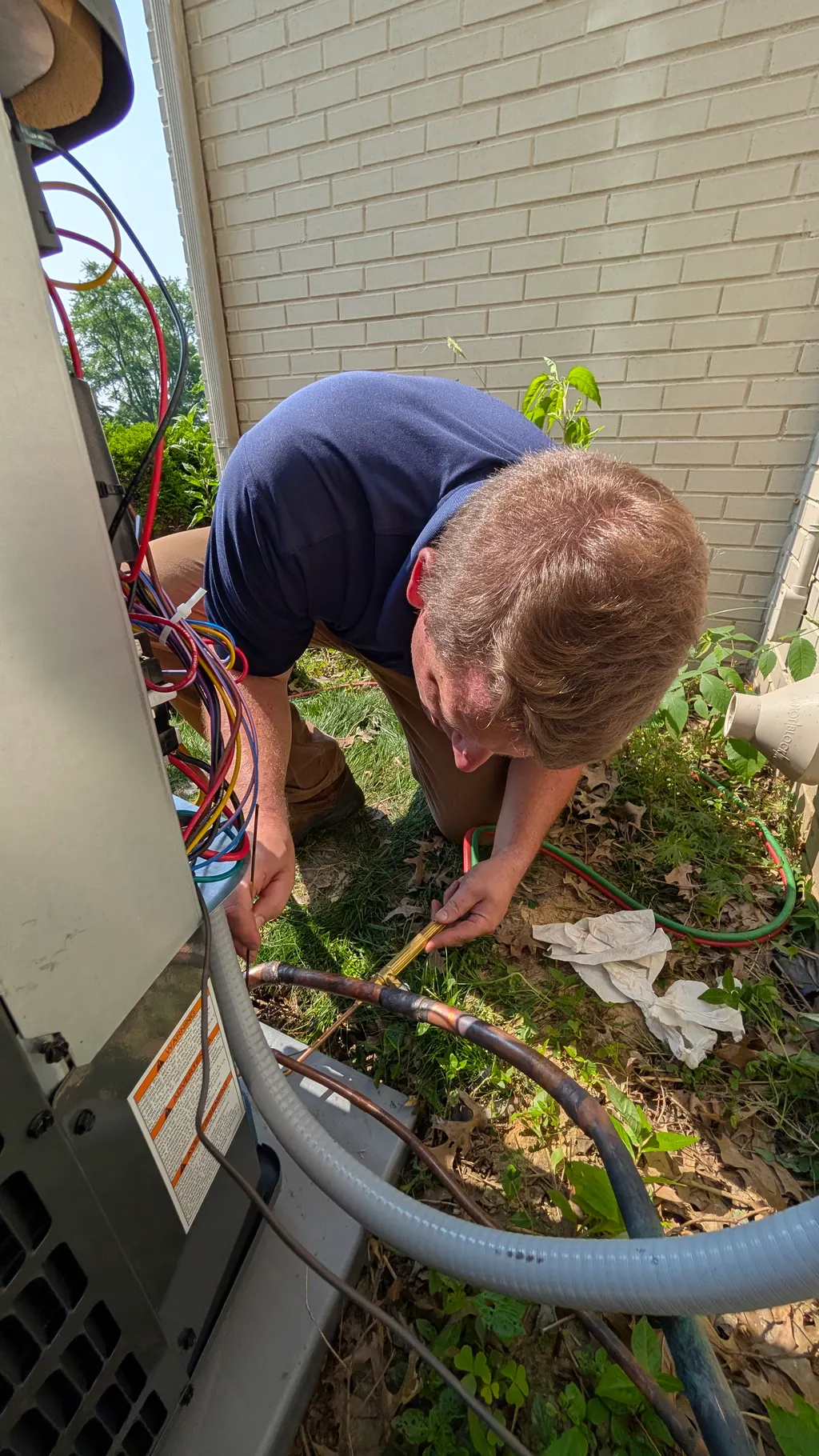
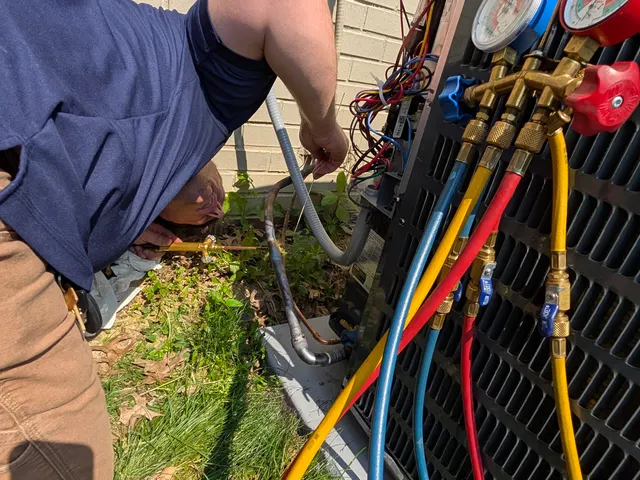
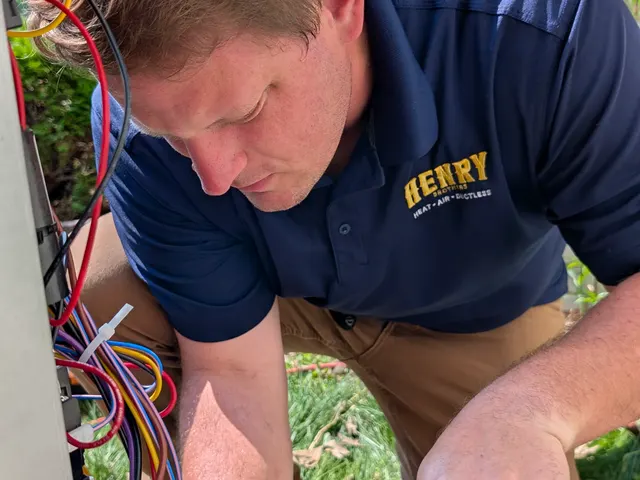
Work We've Handled
Real calls across Clark and Floyd County, no stock photos.
Transparent Pricebook™
Every repair has a price, and you see it before we start: parts, labor, the full picture. No good-better-best games, no number that grows once the panel is off.
Published pricebook coming soon: what the Transparent Pricebook™ covers or call for upfront pricing before we schedule.
Heat side of the house acting up, or weighing a replacement?
AC Repair by Town
Towns We Serve
Clark and Floyd County and the surrounding area. No trip charge in our service area.
Central AC Repair: Common Questions
How much does central AC repair cost in Clark and Floyd County?
The part that failed sets the price. A capacitor swap costs far less than a compressor. We diagnose first, then hand you a written quote before any work is done, and the price we quote is the price you pay. Our HVAC repair cost guide explains what drives the number.
Do you offer 24/7 emergency AC repair?
We run a regular schedule rather than an overnight emergency line. Call (812) 994-1008 and we will give you a real arrival window instead of a promise we cannot keep. You can also schedule online, tell us what the system is doing, and we will confirm a time that holds.
Should I repair or replace my central air conditioner?
Age, repair cost, and refrigerant type decide it. A fifteen-year-old system with a failed compressor on a phased-out refrigerant argues for replacement; a five-year-old unit with a bad capacitor argues for the repair. We lay out both numbers and let you choose. Our second opinion visits exist for exactly this question.
Do you repair ducted heat pumps as well as central AC?
Ducted heat pumps are covered on the same repair calls. In cooling mode a heat pump works like a central air conditioner, so the diagnosis follows the same path. If your outdoor unit is past fixing, ducted heat pump installation is the conversation we would have next, with a written quote either way.
What brands of central air conditioner do you work on?
Carrier, Trane, Lennox, Goodman, Rheem, Amana, and most other major brands share the same core parts: capacitors, contactors, motors, coils. We stock the common failure parts on the truck and tell you the lead time when a repair needs a manufacturer-only component. A Clean and Check℠ visit works on any brand too.
My AC runs all day but the house never cools. Is that a repair call?
A system that runs constantly without reaching the thermostat setting is losing capacity somewhere: low refrigerant, a dirty condenser coil, leaking ducts, or an undersized unit fighting July humidity. Start with our AC not cooling guide for the checks you can do safely, then have us measure what the system is actually delivering.
Can a maintenance visit keep my AC from breaking down in July?
Most July failures start as small problems in April: a weak capacitor, a dirty coil, restricted airflow. Our $99 Clean and Check℠ catches those before the heat arrives, and the Two Seasons membership pairs the spring AC visit with a fall furnace visit plus 10% off repairs for $159 a year.
AC Down in the Middle of Summer?
Tell us what it's doing. We'll come out, diagnose it, and hand you a written price before any work starts.